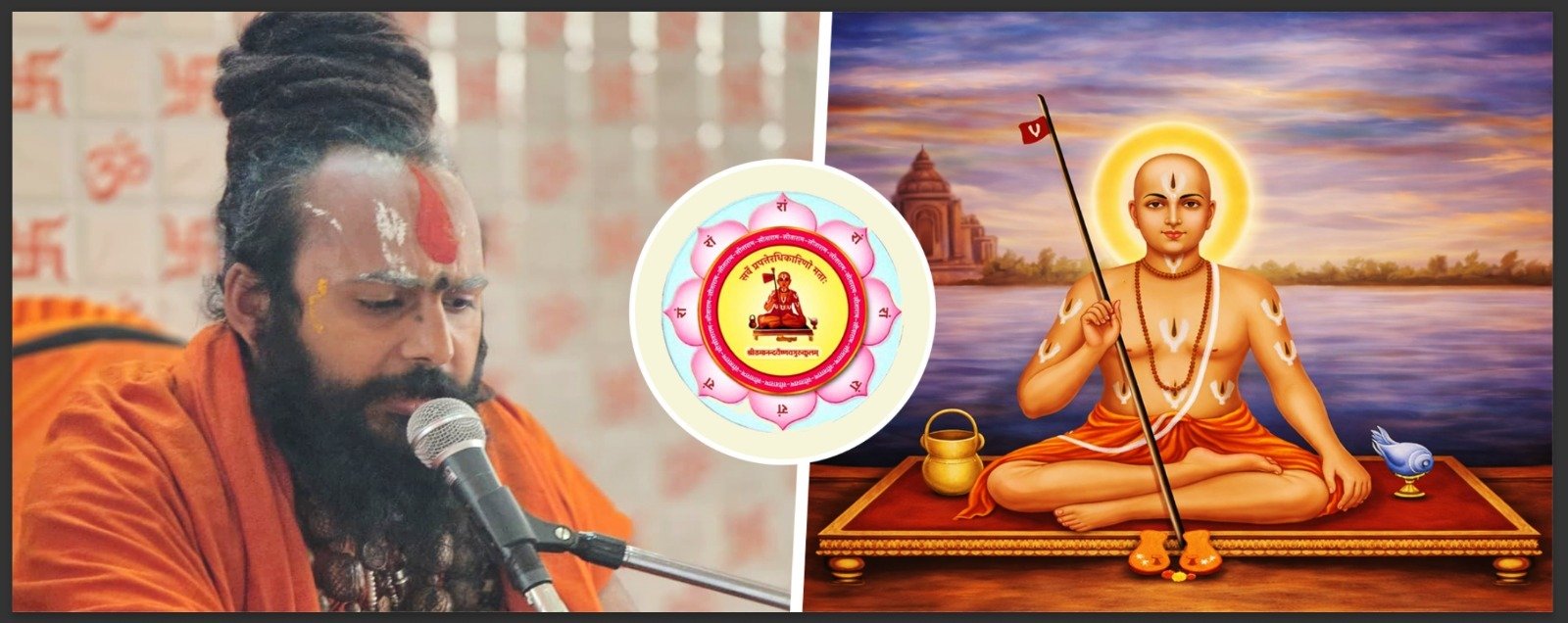
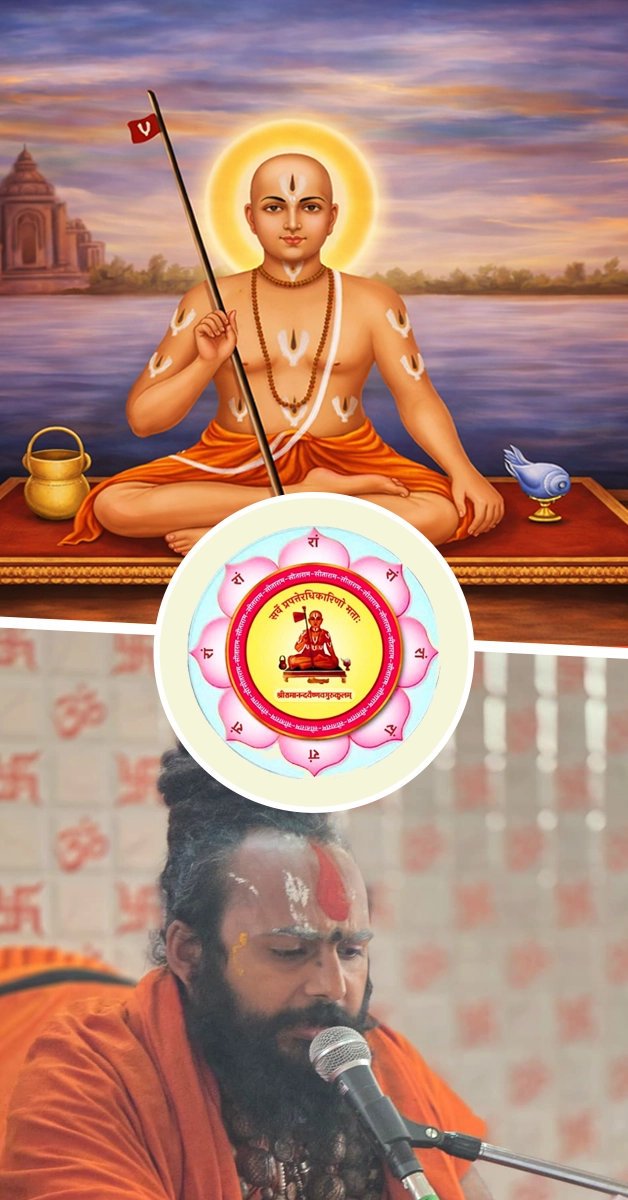
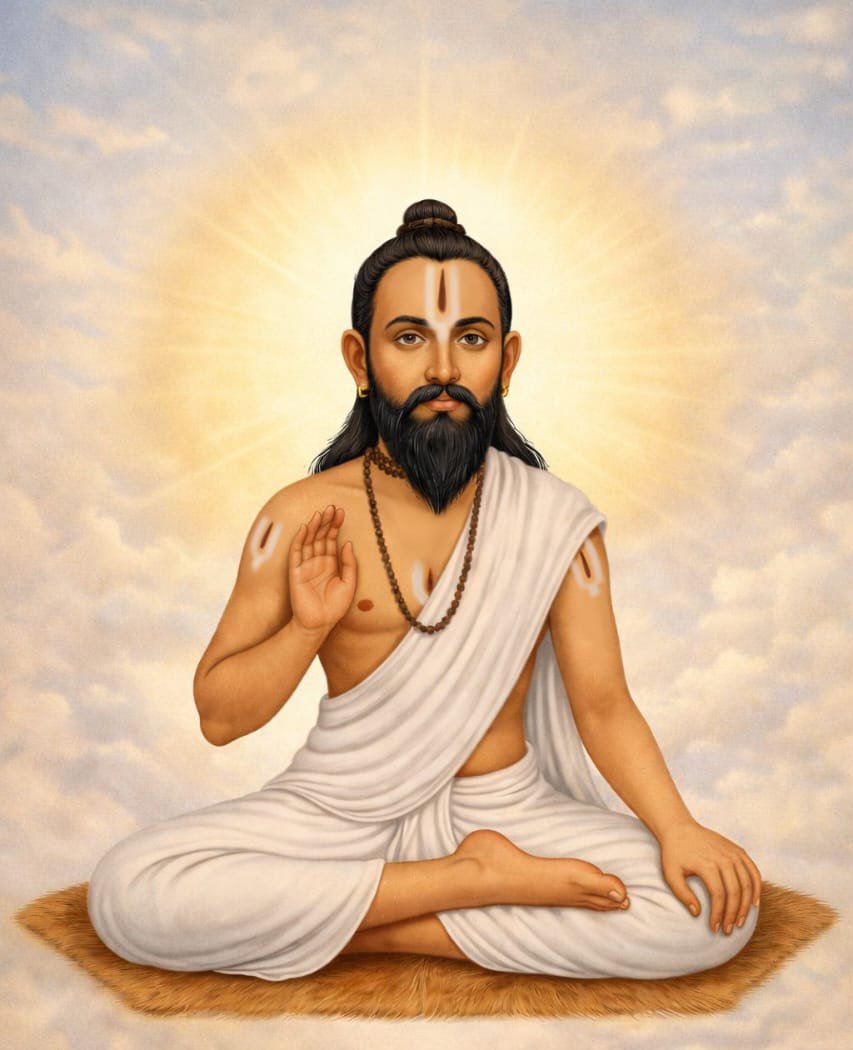
Shri Ramanandacharya Ji (14th century) was a pioneering figure in the Bhakti movement and the founding spiritual master of the Ramanandi Sampradaya. At a time when religious practices were heavily restricted by caste and social boundaries, he championed equality, universal devotion, and the oneness of all beings before God.
He taught that the divine name of Shri Ram is open to all—regardless of birth, background, or status—and that the path of Bhakti (devotional love) is the truest way to attain God.
राम नाम सर्वोपरि – The name of Shri Ram is supreme
The soul has no caste, and spiritual merit lies in love and surrender.
God resides in every being—service to others is service to Him.
Guru and Shishya (teacher and student) are bound by love, not hierarchy..
Shri Ramanandacharya’s teachings shaped the lives of some of India’s greatest saints—Kabir, Ravidas, Pipa, Sena, Dhanna Bhagat, and many others.
These disciples carried his message of unity, devotion, and spiritual liberation to every corner of the Indian subcontinent, transforming society from within.
“जाके प्रिय न राम वैदेही, सो नर तजिए कोटि बैरी सम जेही”
(One who does not love Shri Ram and Sita is more dangerous than a million enemies)
Teaching: True devotion matters more than external rituals or caste.
“जाति-पाँति पूछे नहीं कोई, हरि को भजे सो हरि का होई”
(One who chants the name of Hari belongs to Him, regardless of caste)
This digital home was created to share the radiant teachings, lineage, and living tradition of Shri Ramanandacharya Ji with seekers across the globe. Whether you’re a devotee, a researcher, or a spiritual explorer—we invite you to learn, reflect, and be inspired.
Teaching: The name of Shri Ram is the purest and most accessible form of God.
“राम नाम सर्वोपरि, तजि सब आश्रय करिए”
(Take refuge in the name of Ram above all else)
Teaching: All souls are equal in the eyes of the Divine.
“कोउ हरिजन, कोउ तुरक कहावे, सब में एक राम बसि जावे”
(Some call themselves Hindus, others Muslims—Ram resides in all)
Teaching: The Guru is the one who lights the inner lamp of truth.
“गुरु बिनु होइ न ज्ञान”
(Without the Guru, there is no true knowledge).
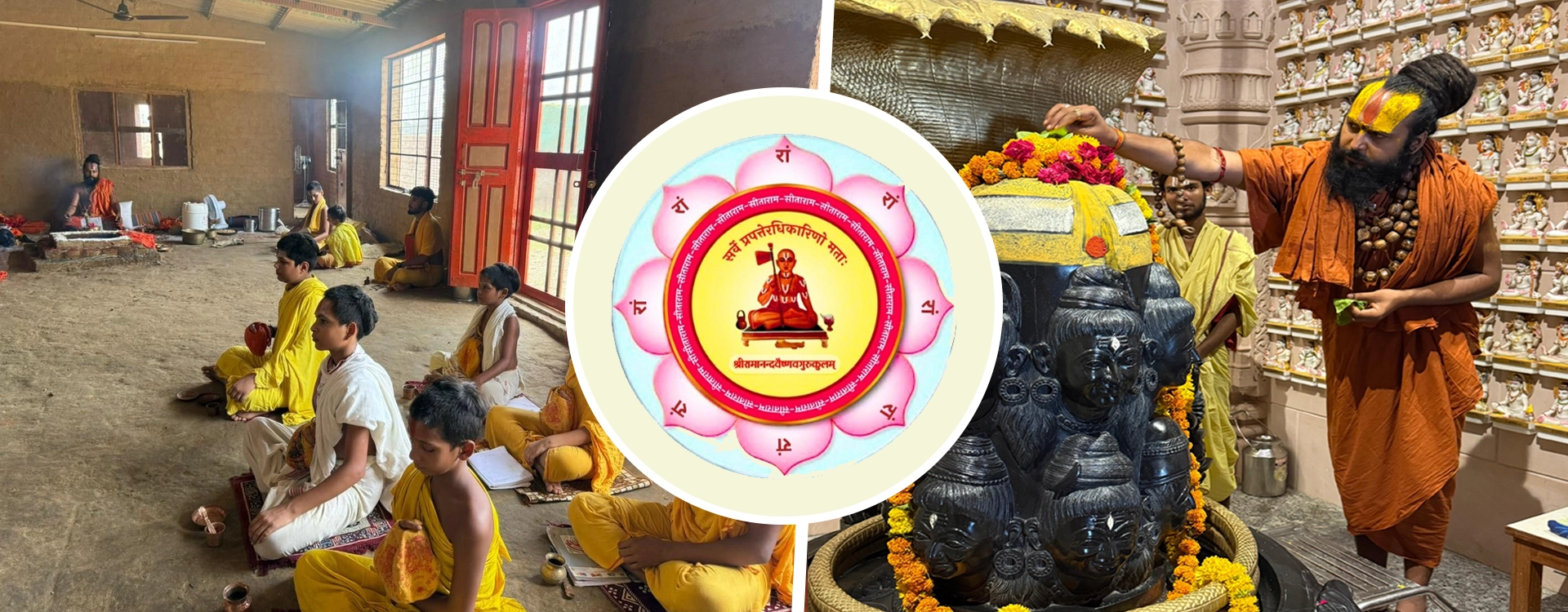
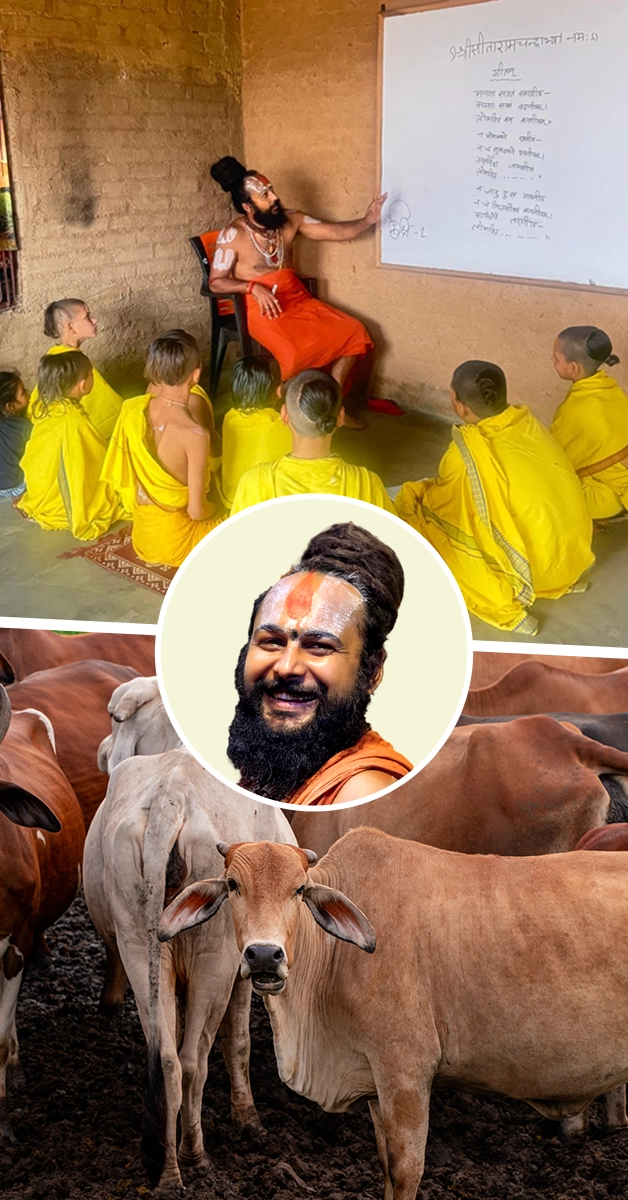
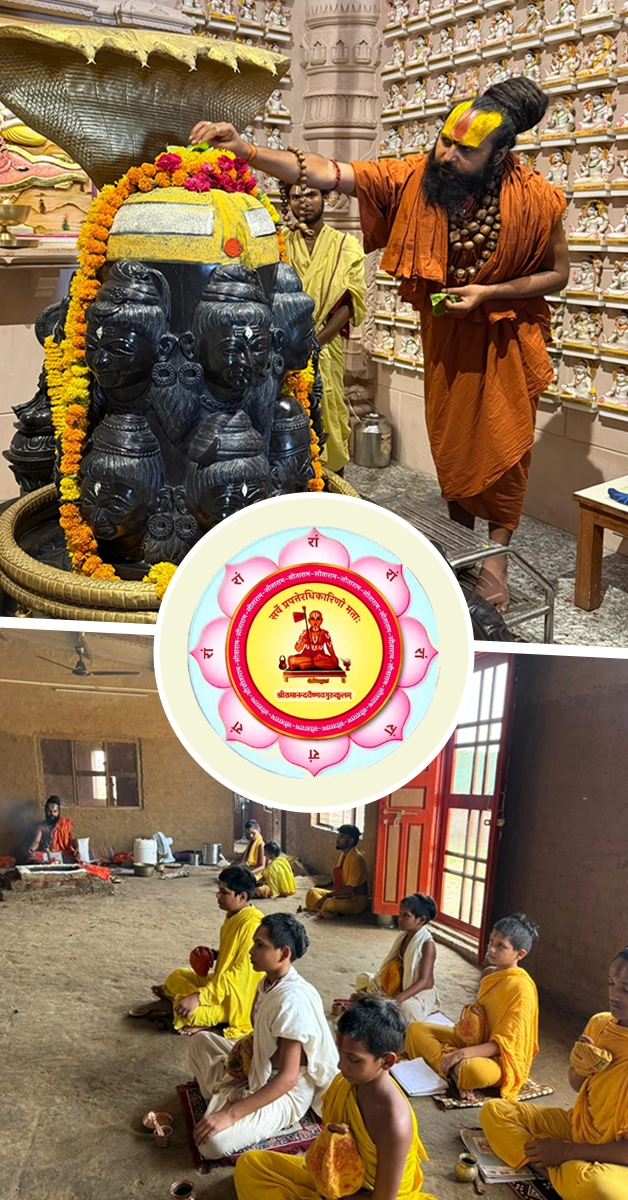
To impart systematic Vedic education through the traditional Gurukula system, including the study of Vedas, Shastras, and allied disciplines, in a spirit of shraddha (faith) and anushthan (practice).
To teach and propagate the Anand Bhashya of Jagadguru Ramanandacharya as a central pillar of the curriculum, enabling students to enter deeply into the philosophical and devotional heart of the Ramanandi sampradaya.
To mould students into disciplined, virtuous, and compassionate Vedic Brahmin scholars, whose personal lives reflect truthfulness, self-control, humility, and unwavering commitment to Sanatana Dharma.
To preserve and continue the traditional parampara received through Jagadguru Shri Ramanadacharya Ji Maharaj, harmonizing timeless scriptural principles with the needs of contemporary society without compromising on authenticity.
To manifest a living centre of Vedic wisdom established by Acharya Shree Satyanarayan Das Ji Maharaj, where the eternal teachings of the Vedas and the luminous lineage of Jagadguru Ramanandacharya are preserved, practiced, and passed on in their authentic form.
To nurture a generation of noble Brahmin scholars who embody purity of character, depth of scriptural realization, and compassionate service to society, becoming guiding lights for Dharma in India and the world.
To create an atmosphere where devotion, knowledge, and righteous conduct naturally blossom, so that students grow into integrated human beings – spiritually awakened, intellectually refined, and socially responsible.
An Enlightened Saint, Avatar of Sage Kapila, and Devotee Par Excellence
Shri Yoganandacharya Ji is believed to be an incarnation of Sage Kapila, as foretold in the Agastya Samhita:
“वैशाख कृष्ण सप्तम्यां मूले परिघसंयुते ।
बुधे कर्केऽथ कपिलो योगानन्दो जनिष्यति।।”
(On the Krishna Saptami of Vaishakh month, under Moola Nakshatra, in the sign of Cancer and Parigha Yoga, Kapila—Yogananda—shall be born.)
He was born in Siddhpur, in the Gujarat region, to a renowned Vedic Brahmin named Manishankar, after the latter performed intense worship to Surya Dev (Sun God) seeking a son. In response to his devotion, Bhagwan Kapila, the proponent of the Sankhya Yoga philosophy, manifested as his son.
He was named Yajnesh Datt at birth and quickly rose to fame as a master of Nyaya (logic) and Vedanta, becoming one of the most respected scholars in Kashi. Alongside his intellectual brilliance, he attained deep spiritual heights through Yoga, performing three extended samadhis—lasting 13 months, 8 months, and 17 months, respectively. He also acquired several yogic siddhis (spiritual attainments).
His Journey to Shri Ramanandacharya Ji
Upon receiving inner command from Lord Vishwanath, he sought refuge under Shri Ramanandacharya Ji, who lovingly initiated him with the Vaishnav Panchasamskaras and the sacred Shri Ram Mantra. He was then instructed to receive the highest knowledge from Shri Anantanand Ji, a chief disciple of Ramanandacharya.
Upon initiation, he was renamed Yoganand Ji.
Shri Anantanand Ji revealed to him the secrets of advanced worship and the Anandabhashya, a commentary on the Prasthanatrayi written by Shri Ramanandacharya himself.
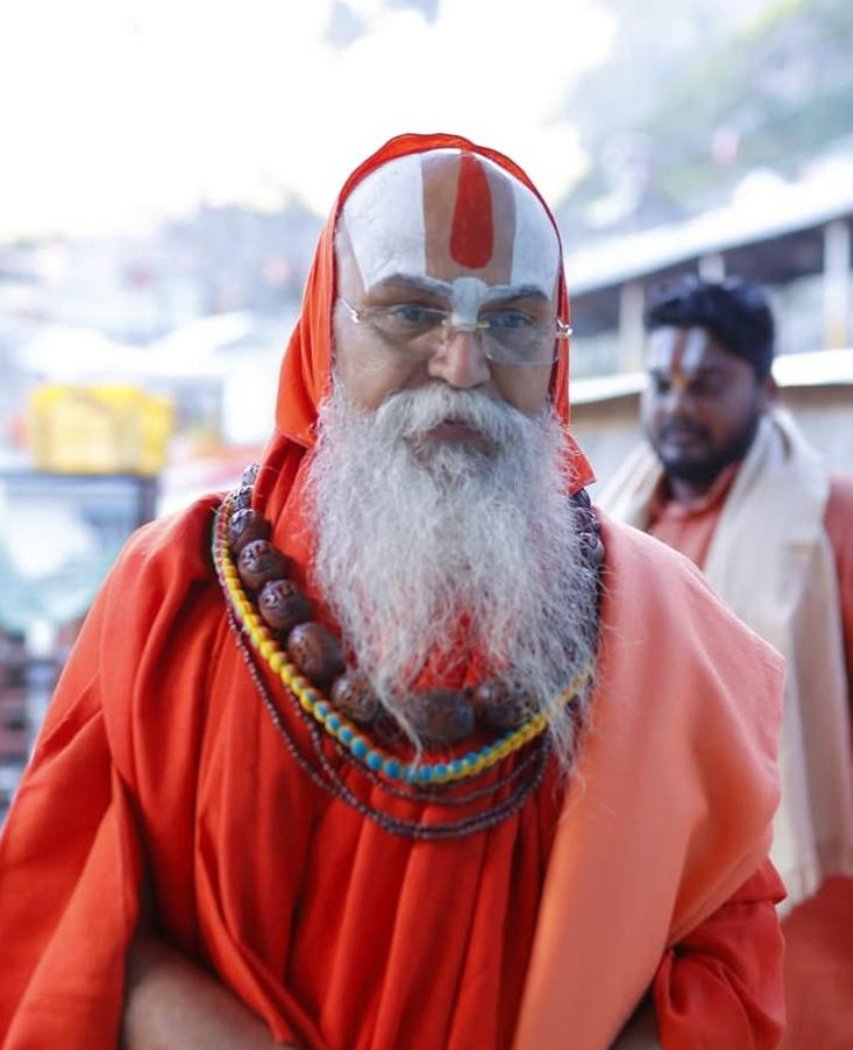
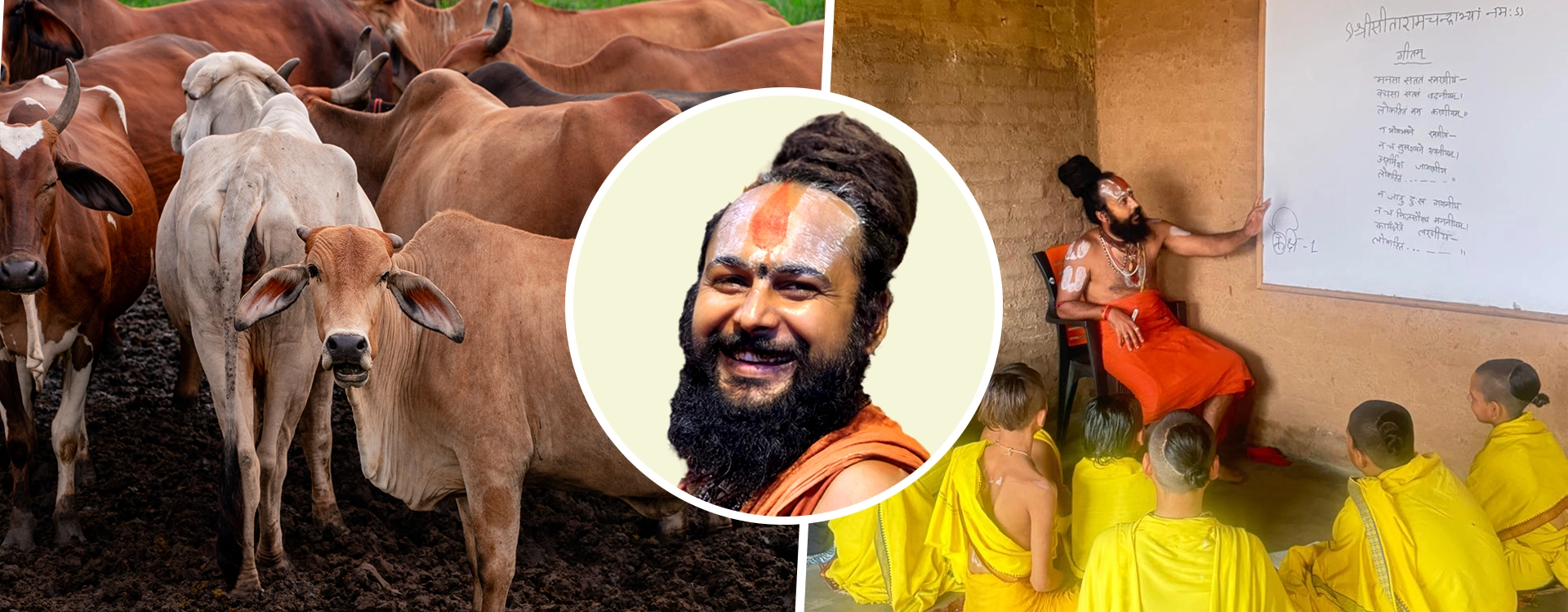
Acharya Shri Ramanand Das Ji Maharaj, Shree Ram Kunj Katha Mandap in Ayodhya (Ramghat, UP), is a prominent spiritual leader known for narrating Shrimad Bhagwat Katha and spreading the teachings of Lord Rama. He is revered as a dedicated scholar of the Ramanandi Sampradaya, conducting spiritual discourses (Katha) to guide devotees on the path of bhakti
He is a renowned speaker of Shrimad Bhagwat Katha and a prominent preacher of Shreemad Valmikiya Ramayan Katha.
His teachings focus on the devotional aspects of Ramanandi tradition and the life of Lord Rama.
He has been awarded a Gold Medal in Nyaya Shastra from Sampurnanand Sanskrit University. He is an expert in delivering discourses on all eighteen Puranas.
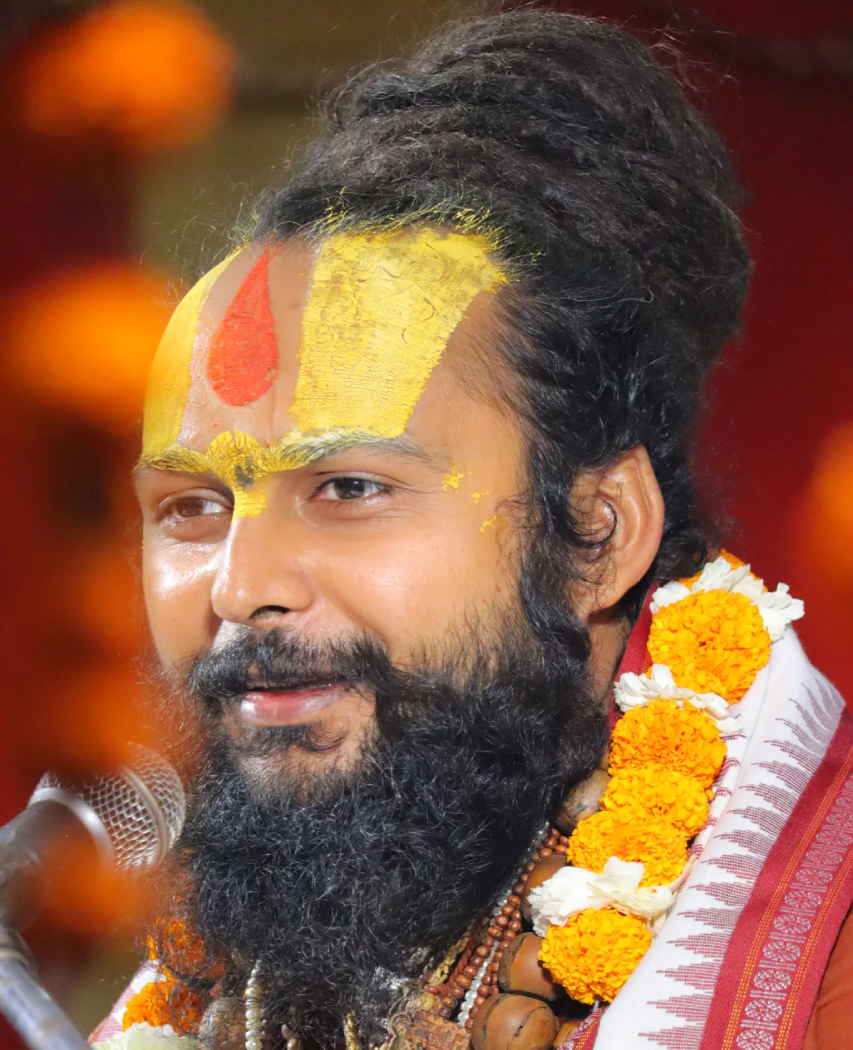
Shree Ramanand Vaishnav Gurukalam & Gaushala
Ayodhya , UP
How much pious credit we get by visiting holy places, offering food for brahmanas, fasting, chanting of mantras by doing many yajnas that much pious credit we can get simply by offering a blade of grass to a cow. – Mahabharata